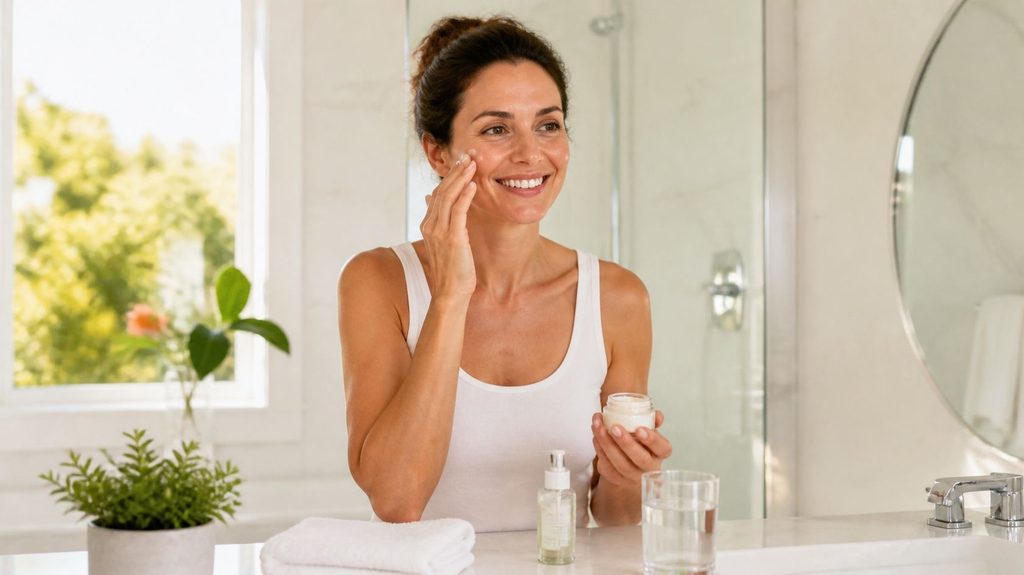
Good skin does not require a shelf full of products. A simple skincare routine, followed consistently, can do more for your skin than a complicated routine that you abandon after a few weeks.
The beauty industry can make skincare seem complicated. Ten-step routines, multiple serums, expensive creams, and a new “miracle” ingredient appear constantly. But you do not need every product that becomes popular.
For most people, the foundation is straightforward: cleanse, moisturize, and protect your skin from the sun. Once those habits are established, you can add products for specific concerns if you actually need them.
Skincare can also be a small form of self-care. The few minutes you spend at the sink in the morning and evening give you an opportunity to slow down and look after yourself.
Here is how to build a simple skincare routine that is practical, sustainable, and easy to maintain.
Know Your Skin Type
Before buying skincare products, pay attention to how your skin behaves.
Oily skin tends to become shiny and may be more prone to clogged pores and breakouts.
Dry skin can feel tight, rough, or flaky, particularly after cleansing.
Combination skin may be oilier around the forehead, nose, and chin while the cheeks feel drier.
Sensitive skin may react easily to products with redness, burning, itching, or stinging.
Normal skin generally feels comfortable without being excessively oily or dry.
Your skin can change with the seasons, age, hormones, climate, and the products you use. You do not have to permanently assign yourself one category.
If you are unsure, keep your routine simple for a while and observe how your skin responds. That can tell you more than choosing products based on a label.
The Three Basics That Matter Most
Whatever your skin type, start with three basic steps:
1. Cleanse
2. Moisturize
3. Protect from the sun
These three steps form the foundation of a practical everyday skincare routine.
1. Cleanse Gently
Cleansing removes sweat, dirt, excess oil, makeup, and sunscreen from the skin.
Use a gentle cleanser suited to your skin and wash with lukewarm water rather than very hot water. Avoid scrubbing aggressively, since rough treatment can irritate the skin.
In the morning, some people with dry or sensitive skin may find that a gentle rinse is enough. In the evening, cleansing is particularly useful for removing the day’s buildup, especially if you have worn makeup or sunscreen.
The goal is clean, comfortable skin, not skin that feels stripped or squeaky.
2. Moisturize
A moisturizer helps support the skin barrier and reduces water loss from the outer layer of the skin.
Choose the texture according to what feels comfortable for you. A lightweight lotion or gel may suit oily skin, while a richer cream may be more comfortable for dry skin.
Apply moisturizer after cleansing while the skin is still slightly damp.
You do not need an expensive moisturizer. A simple product that agrees with your skin and that you will use consistently can be a better choice than a luxury cream that sits unopened in a cabinet.
3. Protect Your Skin From the Sun
Sun protection is one of the most important long-term skincare habits.
Apply sunscreen to exposed areas such as your face, neck, and hands. If you are spending extended time outdoors, reapply according to the product’s directions and your activity.
Sun protection also includes ordinary habits such as seeking shade, wearing protective clothing, and using a hat when appropriate.
If you want healthier-looking skin over the long term, daily sun protection is a much better place to start than chasing the latest anti-aging product.
A Simple Morning and Evening Routine
A good skincare routine does not need to take 20 minutes.
Morning
A basic morning routine can be:
- Cleanse or rinse your face.
- Apply moisturizer if your skin needs it.
- Apply broad-spectrum SPF 30 or higher.
That’s it.
If you use a treatment product such as vitamin C, you can add it between cleansing and moisturizing. But it is not necessary to build a complicated routine simply because other people do.
Evening
Your evening routine can be just as simple:
- Remove makeup and cleanse your skin.
- Apply any treatment product you use.
- Moisturize.
If you wear makeup or several layers of sunscreen, you may prefer a first cleansing step with an oil or balm followed by your regular cleanser. But double cleansing is not automatically necessary for everyone.
The best routine is one you can repeat without it becoming a chore.
Make Your Routine Automatic
Consistency becomes much easier when skincare is attached to something you already do.
Keep your basic products somewhere visible and convenient. For example, you could make your routine part of brushing your teeth in the morning and evening.
This is sometimes called habit stacking: attaching a new habit to an established one.
You do not need to worry if you miss a night. Skincare is not a test of perfection. What matters is what you do most of the time.
A simple routine that you follow for years is more useful than a complicated routine you follow for ten days.
Add Skincare Products Slowly
Once your basic routine feels natural, you may decide to add a product for a specific concern.
This is where many skincare routines become unnecessarily complicated.
Instead of adding several new products at once, introduce one product at a time. Give yourself enough time to see how your skin responds before adding something else.
For example, depending on your goals, you might consider:
- Vitamin C for antioxidant support and to help improve the appearance of uneven skin tone.
- Retinoids for concerns such as fine lines, acne, and uneven texture.
- Salicylic acid for clogged pores and some types of acne.
- Gentle exfoliating acids for improving the appearance and feel of uneven or rough skin.
These ingredients are not automatically suitable for everyone.
Retinoids can cause irritation, particularly when you first start using them. If you are pregnant or trying to become pregnant, ask your healthcare professional whether a retinoid is appropriate for you.
Whatever you add, start slowly and follow the product instructions.
If your skin becomes persistently irritated, painful, very red, or excessively dry, stop the new product and return to a simpler routine. If the problem continues, consult a dermatologist.
Do Not Confuse More Products With Better Skincare
A common skincare mistake is assuming that more must be better.
Using several strong active ingredients at the same time can leave your skin irritated. Then you may buy another product to deal with the irritation caused by the first products.
This creates a cycle of adding rather than simplifying.
Your skin does not need to feel tingly, tight, or burning for a product to be effective.
When something works comfortably, there is often no reason to replace it simply because a newer product has appeared.
Everyday Habits Matter Too
Skincare does not happen only at the bathroom sink.
Your everyday habits can support your general health and your skin at the same time.
Get enough sleep, eat a varied diet, stay physically active, and avoid smoking. These habits have benefits that go far beyond appearance.
A balanced diet that includes vegetables, fruit, whole grains, protein, and healthy fats provides the nutrients your body needs. There is also no need to follow an extreme “skin diet” unless a healthcare professional has recommended a specific approach.
Try to avoid picking or squeezing spots. Doing so can increase inflammation and raise the risk of marks or scarring.
It is also worth paying attention to things that repeatedly touch your face, such as phones, pillowcases, hats, or makeup brushes, and keeping them reasonably clean.
Give Your Skin Time
Skincare requires patience.
Some products can produce noticeable effects relatively quickly, while others require consistent use over weeks or months. Your skin can also change because of age, seasons, hormones, stress, medications, and other factors.
Do not change your entire routine every time you see a new skincare trend online.
Instead, make one change, observe the result, and decide whether it is helping.
Taking photographs under similar lighting every few weeks can sometimes give you a more realistic idea of gradual changes than checking the mirror several times a day.
Be Kind to Your Skin and Yourself
There is another side to skincare that has nothing to do with ingredients.
Scrolling through carefully edited photographs can make normal skin seem abnormal. Pores, fine lines, uneven texture, and occasional blemishes are part of having human skin.
Healthy-looking skin does not have to be flawless skin.
Use your skincare routine as a few quiet minutes of self-care rather than another reason to criticize yourself. Notice how your skin feels. Enjoy the simple ritual. Take care of yourself without constantly searching for something that needs fixing.
Good skincare should help you feel comfortable in your own skin, not make you more anxious about your appearance.
When to See a Dermatologist
Simple skincare is appropriate for many everyday concerns, but it cannot replace professional care when something unusual or persistent is happening.
Consider seeing a doctor or dermatologist if you have persistent or severe acne, a rash that does not improve, painful or worsening skin problems, or a mole or other skin mark that changes in size, shape, or color.
Professional advice can also help if you are unsure which products or treatments are appropriate for your skin.
Try This Simple Skin Routine This Week
For the next seven days, focus on the basics rather than buying anything new:
- Cleanse gently each evening.
- Moisturize after cleansing if your skin needs it.
- Apply broad-spectrum SPF 30 or higher every morning to exposed skin.
- Avoid picking or squeezing blemishes.
- Add no more than one new skincare product if you decide you need one.
- Keep your phone and other frequently touched items reasonably clean.
- Give yourself two quiet minutes for your morning or evening routine without looking at your phone.
You do not need a bathroom cabinet full of products to take good care of your skin.
Start with the basics. Keep them simple. Pay attention to how your skin responds, and add something only when there is a good reason.
The most effective skincare routine is not necessarily the most expensive or the most complicated. It is the one that suits your skin and that you can comfortably maintain for years.
A Note About Health
This article provides general skincare and lifestyle information and is not medical advice. Skin conditions and individual skincare needs vary. If you have persistent symptoms, a concerning skin change, or questions about a particular ingredient or treatment, consult a qualified healthcare professional or dermatologist.