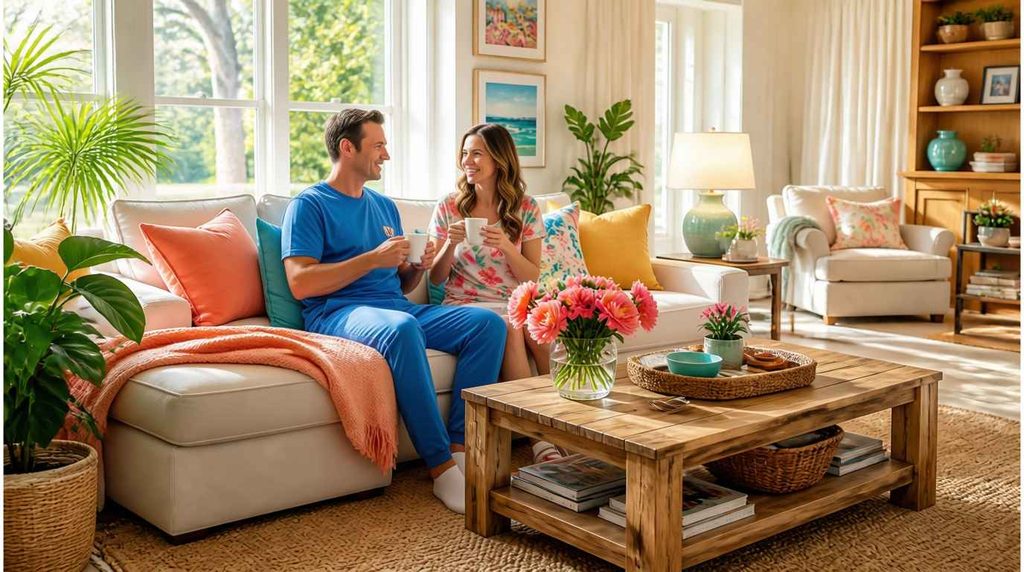
A calm home does more than look attractive. It makes everyday life easier, gives you room to relax, and creates a comfortable place to begin and end each day.
You do not need a bigger house, expensive furniture, or a complete renovation to create a more peaceful living space. Often, the biggest improvements come from clearing clutter, organizing everyday belongings, making better use of natural light, and creating comfortable places to rest.
Your surroundings influence how you experience ordinary moments. A tidy kitchen makes preparing meals more pleasant. A welcoming living room invites you to slow down. A comfortable bedroom helps make the end of the day feel more relaxing.
The goal is not to create a perfect home that looks like a magazine photograph. It is to create a home that works for your needs, reflects your personality, and supports the kind of life you want to live.
Here are seven practical ways to make your home calmer, more comfortable, and more enjoyable.
- 1. Decide How You Want Your Home to Feel
- 2. Clear Clutter and Simplify Your Surfaces
- 3. Give Everyday Belongings a Permanent Place
- 4. Use Natural Light and Softer Evening Lighting
- 5. Create a Comfortable Corner for Rest
- 6. Add Plants, Natural Materials, and Personal Touches
- 7. Establish a Simple Weekly Home Reset
- Make Your Home Support Your Everyday Life
1. Decide How You Want Your Home to Feel
Before moving furniture or buying decorative items, think about the atmosphere you want to create.
Choose three words that describe your ideal home. Perhaps you want it to feel warm, open, and restful. Maybe you prefer bright, organized, and welcoming.
These words give you a simple direction for making decisions.
When considering a new rug, a piece of furniture, or a change to your living room, ask yourself whether it contributes to the atmosphere you want. If it does not, you may not need it.
This approach also prevents unnecessary spending. Instead of buying things simply because they look attractive in a store or online, you choose items that suit your home and the way you live.
If you share your home with other people, involve them in the process. Discuss what would make the shared spaces more comfortable and agree on a few priorities.
A home should reflect the people who live in it, not imitate somebody else’s idea of perfect interior design.
2. Clear Clutter and Simplify Your Surfaces
One of the quickest ways to make a home feel more peaceful is to reduce unnecessary clutter.
Kitchen counters, dining tables, bedside tables, and entryway shelves often become collection points for things that have no permanent place. Mail, keys, chargers, bags, shopping receipts, and other everyday objects gradually take over.
Start with one surface rather than trying to organize the entire house.
Remove everything, clean the surface, and return only the things you actually use or want to display. Put other belongings where they belong, donate items you no longer need, and discard what is no longer useful.
You can follow a simple approach:
- Clear one small area at a time.
- Keep frequently used objects accessible.
- Remove duplicate or unnecessary items.
- Avoid filling every available shelf and surface.
- Give decorative objects enough space to be appreciated.
You do not have to become a minimalist. Personal belongings, books, photographs, and decorative pieces can make a home more interesting and welcoming.
The idea is to make room for the things that matter rather than allowing everything to compete for attention.
For an easy starting point, spend ten minutes clearing one area each day. Small improvements are easier to maintain than an exhausting weekend spent reorganizing the entire house.
3. Give Everyday Belongings a Permanent Place
A home becomes easier to maintain when everyday objects have convenient places to return to.
Think about where things naturally accumulate. If keys always end up on the kitchen counter, place a small bowl or tray near the entrance. If coats are regularly left on chairs, install hooks where people actually enter the home.
The same principle works throughout the house.
- Keep a basket near the entrance for items that need to go upstairs or into another room.
- Use a tray for mail and papers that need attention.
- Store chargers together in a small box.
- Keep frequently used kitchen utensils close to where you prepare food.
- Place a laundry basket where clothes are most often changed.
The important point is to make putting things away convenient.
You can also use the one-in, one-out rule. When you bring home a new mug, book, decorative object, or item of clothing, consider whether an older one can be donated or removed.
This prevents belongings from gradually taking over cupboards, drawers, and shelves.
A well-organized home does not require constant tidying. It requires simple systems that make everyday tidying easier.
4. Use Natural Light and Softer Evening Lighting
Lighting has a significant effect on the atmosphere of a room.
Natural daylight makes rooms feel brighter and more inviting. Artificial lighting, meanwhile, can change the mood from active and practical during the day to warm and relaxing in the evening.
Start by making the most of the daylight you already have.
Open curtains and blinds in the morning. Keep window areas reasonably clear, and clean the glass regularly. If furniture blocks a window, consider whether rearranging it could allow more light into the room.
Mirrors can also help distribute natural light. Placing a mirror where it reflects a window can make a room feel brighter and more spacious.
In the evening, use softer lighting instead of relying entirely on bright ceiling lights.
Table lamps, floor lamps, and smaller lights create a more comfortable atmosphere. Warm-white bulbs, often around 2700K, provide a gentle golden tone that works particularly well in living rooms and bedrooms.
You can use brighter lighting where you need it, such as above a kitchen counter or reading area, while keeping the rest of the room softer.
Candles can add warmth to a room too, provided they are used safely and never left unattended.
A thoughtful lighting arrangement can change how a room feels without requiring new furniture or expensive decorating.
5. Create a Comfortable Corner for Rest
Every home benefits from having at least one place dedicated to relaxing.
It does not need to be a separate room. A comfortable chair beside a window, a small reading area, or an inviting corner of the living room can serve the purpose.
Start with a comfortable seat. Add a small table for a cup of tea, a reading lamp, and perhaps a soft blanket or cushion.
Keep the area relatively uncluttered. A few books, a plant, or a personal photograph can make it feel welcoming.
Try to keep work-related objects out of this space. Laptops, paperwork, laundry, and household tasks can make it harder to associate the area with relaxation.
You can use this corner for reading, listening to music, enjoying a quiet drink, or simply sitting without having to accomplish anything.
Even ten minutes can provide a pleasant pause in a busy day.
If you would like more inspiration, see our guide to 15 Cozy Corner Ideas for Reading, Relaxing, or Daydreaming.
6. Add Plants, Natural Materials, and Personal Touches
A calm home should feel welcoming, not empty or lifeless.
Natural materials, plants, flowers, and personal objects can make a space feel warmer and more individual.
Consider adding:
- A soft wool or cotton throw to a sofa.
- Linen or cotton curtains.
- Wooden bowls, trays, or decorative objects.
- A comfortable rug that adds texture.
- A few indoor plants.
- Fresh flowers or branches in a simple vase.
- Framed photographs or artwork that you enjoy.
Plants are an especially easy way to bring a sense of life into a room. If you do not have much experience caring for them, start with varieties that suit your home’s light conditions and your ability to maintain them.
A home does not need to be filled with plants or decorations. A few thoughtfully chosen items can make a bigger difference than numerous objects competing for attention.
Pay attention to how your home smells, too. Fresh air, clean fabrics, and a pleasant natural scent can contribute to a welcoming atmosphere. Avoid overpowering fragrances, especially in shared spaces.
For more ideas, read How to Make Your Home Smell Amazing Naturally.
The most important thing is to choose details that feel personal. A favorite photograph, a souvenir from a memorable trip, or a handmade object can give a room character in a way that expensive decorations cannot.
7. Establish a Simple Weekly Home Reset
A calm home is easier to maintain when you have a few regular habits.
Rather than waiting until everything becomes messy, set aside about 20 minutes once a week for a simple home reset.
You might:
- Clear kitchen counters and dining tables.
- Return misplaced objects to their usual places.
- Wipe frequently used surfaces.
- Put away clothes and shoes.
- Sort incoming mail and paperwork.
- Empty waste and recycling bins.
- Straighten cushions and blankets.
- Prepare the main living areas for the coming week.
You can put on music or listen to something enjoyable while you work.
The purpose is not to make the entire house spotless. It is to prevent small messes from becoming overwhelming and to make the next few days easier.
You can also spend five minutes each evening returning a few things to their places. This small habit often makes the following morning more pleasant.
If you find that certain areas repeatedly become messy, look at the organization system rather than blaming yourself. Perhaps a basket, hook, shelf, or more convenient storage location would solve the problem.
For additional ideas, see The Home Friction Audit: 12 Tiny Things in Your House That Annoy You Every Day.
Make Your Home Support Your Everyday Life
A beautiful home is not necessarily a calm home. A room can contain expensive furniture and carefully chosen decorations yet still feel uncomfortable if it does not suit the people who live there.
Think about your daily routines.
Do you have a comfortable place to enjoy breakfast? Is your kitchen arranged in a way that makes cooking easier? Can you find your keys when you are leaving? Is there somewhere to sit quietly after a busy day?
These practical details matter.
Sometimes the best improvement is not buying something new but removing an obstacle. Moving a chair, clearing a countertop, improving storage, or changing the lighting may make everyday life noticeably more pleasant.
Your home should support your real activities, habits, and priorities.
If you enjoy entertaining, create a welcoming place for guests. If you value quiet time, make room for reading or relaxing. If you work from home, arrange a practical work area that can be separated from your personal time.
A home that supports your lifestyle is more valuable than one that simply looks impressive.
Try These Five Changes This Week
You do not have to change everything at once. Start with a few manageable improvements:
- Choose three words that describe how you want your home to feel.
- Clear one surface each day for five days.
- Give one frequently misplaced object a convenient permanent home.
- Use softer lighting in the living room after dinner.
- Create a comfortable corner where you can spend ten minutes relaxing.
Notice which changes make the biggest difference to your everyday experience. Keep those habits and gradually introduce others.
A Calm Home Is Built Through Small Choices
Creating a calm home is not a decorating project with a finish line. It is an ongoing process of making your surroundings more comfortable, practical, and enjoyable.
You do not need to spend a lot of money or follow every interior design trend. Clear a little clutter, improve the lighting, organize everyday belongings, add personal touches, and make room for rest.
Most importantly, create a home that feels good to live in.
When your surroundings support your routines and give you space to relax, ordinary days can become more comfortable and enjoyable. That is what makes a home a good foundation for the life you want.